




Computer Science & AI for Science

Rui Wang

Rui Wang

GitHub Google Scholar ORCID LinkedIn Email

About Me

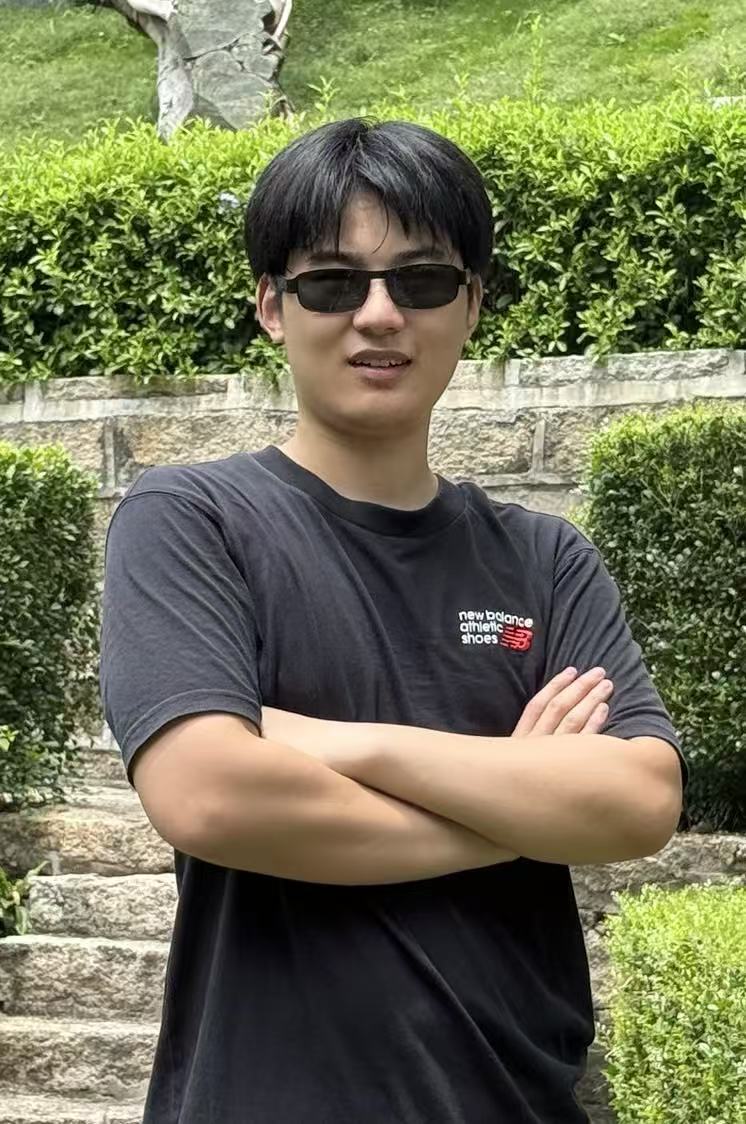
Hi, I'm Rui Wang, an undergraduate student in Computer Science at the University of Minnesota, Twin Cities. My research interests broadly lie in AI for Science (AI4Science), with a current focus on Generative Models (Diffusion, Optimal Transport), Geometric Deep Learning, Spatial Transcriptomics, and Protein/Peptide Design.

I have published several first-author or co-author papers in journals including Genome Biology, Briefings in Bioinformatics, Journal of Chemical Information and Modeling, and BMC Genomics.

Feel free to reach out if you'd like to chat about research or collaboration!

Education

  • B.A. in Computer Science, University of Minnesota, Twin Cities, USA, Jan. 2026 – Jan. 2027 (Expected)
  • B.Eng. in Computer Science and Technology (Transfer), Wenzhou University of Technology, China, Sept. 2022 – Nov. 2025

Research Experience

  • University of Illinois Chicago (UIC) (Sept. 2026 – Present)
    • Advisor: Prof. Hao Chen
    • Topic: AI for Computational Biology and Spatial Transcriptomics
  • Vanderbilt University (May 2026 – Present, Remote)
    • Advisor: Prof. Maizie Zhou
    • Lab: Vanderbilt Computational Biology Lab (VCBL)
    • Topic: Computational Spatial Transcriptomics
  • North Carolina State University (Sept. 2024 – Present)
    • Advisor: Prof. Zixuan Cang
    • Project: GenOT - Generative Optimal Transport for Spatial Transcriptomics
  • Wenzhou University of Technology (Sept. 2022 – Nov. 2025)
    • Jointly advised by Prof. Linlin Zhuo and Prof. Quan Zou from the University of Electronic Science and Technology of China
    • Projects: Diff-AMP (Generative AI for Antimicrobial Peptide Design), SE-SSP (Transformer-based Peptide Recognition), StableDNAm (DNA Methylation Prediction)

Academic Service

  • Ad hoc Reviewer for RECOMB (2027), Briefings in Bioinformatics (BIB), BMC Cancer, IEEE/ACM Transactions on Computational Biology and Bioinformatics (TCBB), Scientific Reports, Discover Oncology, Medical Oncology, BMC Pulmonary Medicine

 NEWS

  • [Sep 2026] Admitted to the Computer Science Ph.D. program at the University of Illinois Chicago (UIC) for Spring 2027 and excited to join Prof. Hao Chen's lab.
  • [Jun 2026] Our paper GenOT: Generative Optimal Transport Enables Spatiotemporal Interpolation and Generation in Cross-platform Spatial Transcriptomics was published in Genome Biology.
  • [May 2026] Joined Prof. Maizie Zhou's lab at Vanderbilt University as a remote researcher, working on computational spatial transcriptomics.
  • [Jan 2026] Our work on intercellular communication and gene regulatory relationship prediction was published in Journal of Chemical Information and Modeling.
  • [Jan 2026] Started my B.A. in Computer Science at the University of Minnesota, Twin Cities.
  • [Sep 2024] Started a research collaboration with Prof. Zixuan Cang at North Carolina State University on generative optimal transport for spatial transcriptomics.
  • [Mar 2024] Our paper Diff-AMP, an integrated generative framework for antimicrobial peptide design, was published in Briefings in Bioinformatics.
  • [Dec 2023] Our paper StableDNAm on DNA methylation prediction was published in BMC Genomics.
  • [Aug 2023] Our paper on plant small secretory peptide recognition (SE-SSP) was published online in Journal of Chemical Information and Modeling.
  • [Sep 2022] Started research with Prof. Linlin Zhuo at Wenzhou University of Technology.

 PUBLICATIONS

2026

  • R. Wang, X. Liu, L. Zhuo, Z. Zhou, J. Xu, Q. Zou, X. Fu. (2026). GenOT: Generative optimal transport enables spatiotemporal interpolation and generation in cross-platform spatial transcriptomics. Genome Biology [Paper]

  • Z. Zhou, Z. Li, Y. Xie, L. Zhuo, R. Wang, X. Yao, H. Hu, X. Fu. (2026). Intercellular Communication Guides the Prediction of Intracellular Gene Regulatory Relationships. Journal of Chemical Information and Modeling. [Paper]

2024

  • R. Wang, T. Wang, L. Zhuo, J. Wei, et al. (2024). Diff-AMP: tailored designed antimicrobial peptide framework with all-in-one generation, identification, prediction and optimization. Briefings in Bioinformatics. [Paper]

2023

  • R. Wang, Z. Zhou, X. Wu, X. Jiang, L. Zhuo, M. Liu, H. Li, X. Fu, X. Yao. (2023). An effective plant small secretory peptide recognition model based on feature correction strategy. Journal of Chemical Information and Modeling. [Paper]

  • L. Zhuo, R. Wang, X. Fu, X. Yao. (2023). StableDNAm: towards a stable and efficient model for predicting DNA methylation based on adaptive feature correction learning. BMC Genomics. [Paper]

 TUTORIALS

Learning Resources

  • Awesome Spatial Transcriptomics GitHub stars – A curated list of 340+ tools, foundation models, datasets, tutorials and papers for spatial transcriptomics and the single-cell methods it builds on, ordered the way an analysis goes. Every repository and paper link is checked. A good starting point if you are new to the field.

Video Tutorials (Coming Soon)

I plan to create video tutorials explaining the research topics I am currently studying and working on, including optimal transport, generative models, spatial transcriptomics, and AI for science.

These videos will focus not only on what the methods are, but also on why they are needed, how they work, and how they can be applied to real research problems. I hope to explain complex ideas step by step and make them more accessible to learners from different backgrounds.

The first tutorials are currently in preparation. Videos, notes, slides, and code will be added here in the future.

AWARDS

  • China National University Student Innovation & Entrepreneurship Development Program, 2023–2024
    • Funded with 10,000 RMB
  • Zhejiang University Student Science and Technology Innovation Activity Program, 2023–2024
    • Funded with 10,000 RMB